
1 / 5
Sentence Speaking
Listen, speak immediately, and see how closely your response matches.
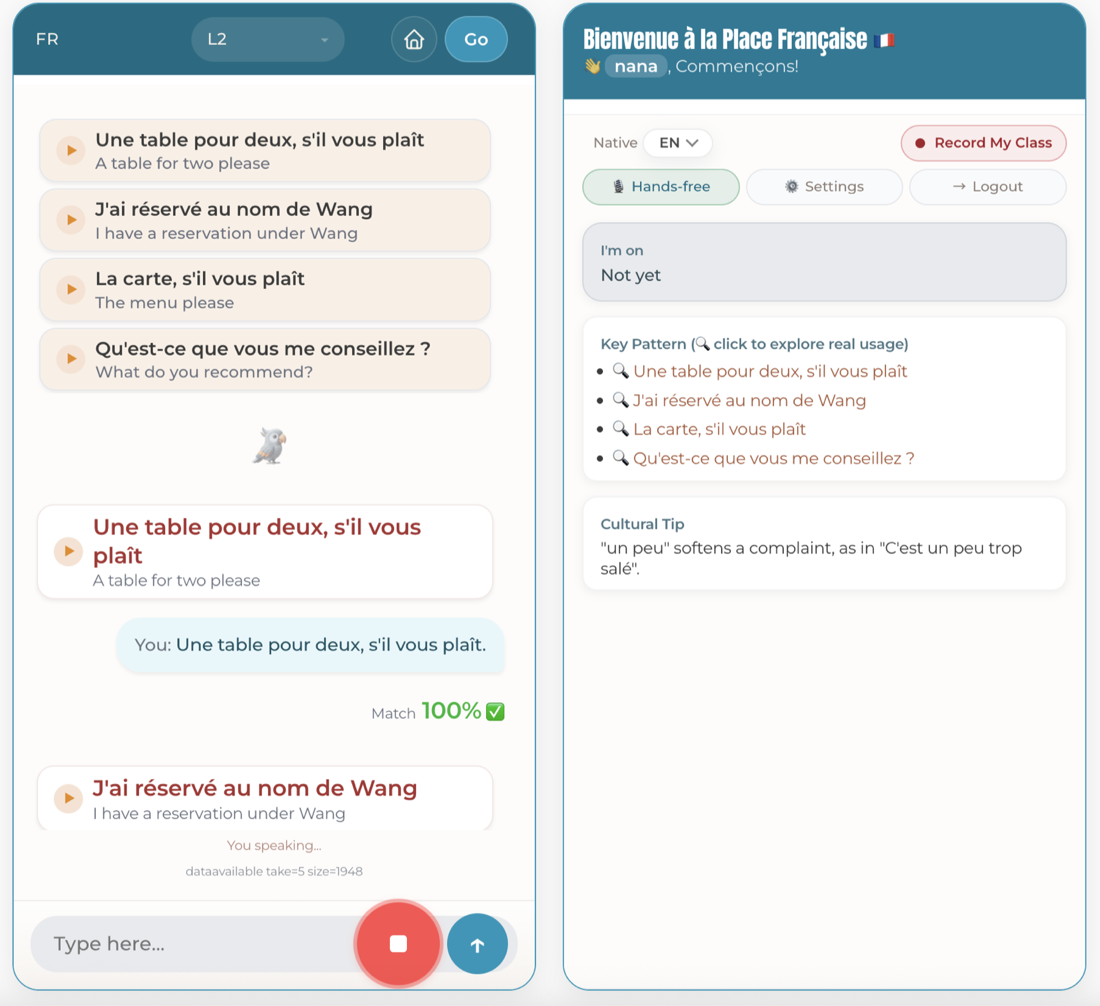 View real product screen
Don't land in another country and spend the whole trip pointing at menus. Practice the sentences you'll actually need before you go.


See an everyday line, say it in the language you're learning, and get scored against how a native actually says it. No sign-up.
Loading…
✕ Not memorizing words — speaking them✓ Travel, daily-life & work✓ Out loud, every day — till it's reflex
At a counter, on a train, or at dinner, you need the sentence to come out.
Repeat it, build it, then use it in a real back-and-forth.
Drill the sounds learners miss most until they become clear and natural.
Type the situation and ParoMe builds a reusable speaking lesson around it.
Practice before the moment arrives, so you are not translating under pressure.
Practice the professional situations you actually need to handle.
Five minutes a day turns “I know this” into “I can say this when someone is looking at me.”
Reading words isn't speaking. You have to say them out loud.
Greetings, polite phrases, self-introduction and travel basics. Repeat them until you can answer without looking.
Learn the patterns for questions, “to be,” “have,” “can,” “like” and “want,” then use them in restaurants, travel, work, or whatever is coming up next.
Skip isolated vocabulary and practice complete sentence patterns until you can respond without prompts.
A hotel check-in, a difficult customer, meeting a partner's family, or ordering in a crowded cafe. ParoMe turns it into speaking practice.
Practice real situations and get mistakes or awkward phrasing fixed on the spot.
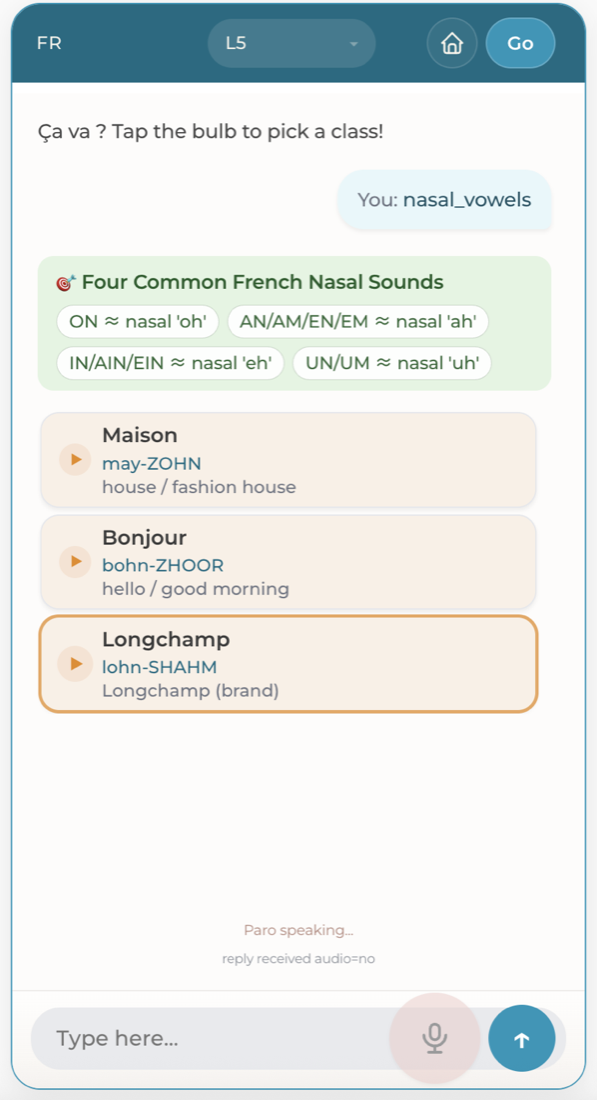
Drill the sounds learners get wrong most. Say the word, hear the model, compare and repeat — until it comes out clear and natural.
Every unit rotates through different ways to turn recognition into spoken reflex.
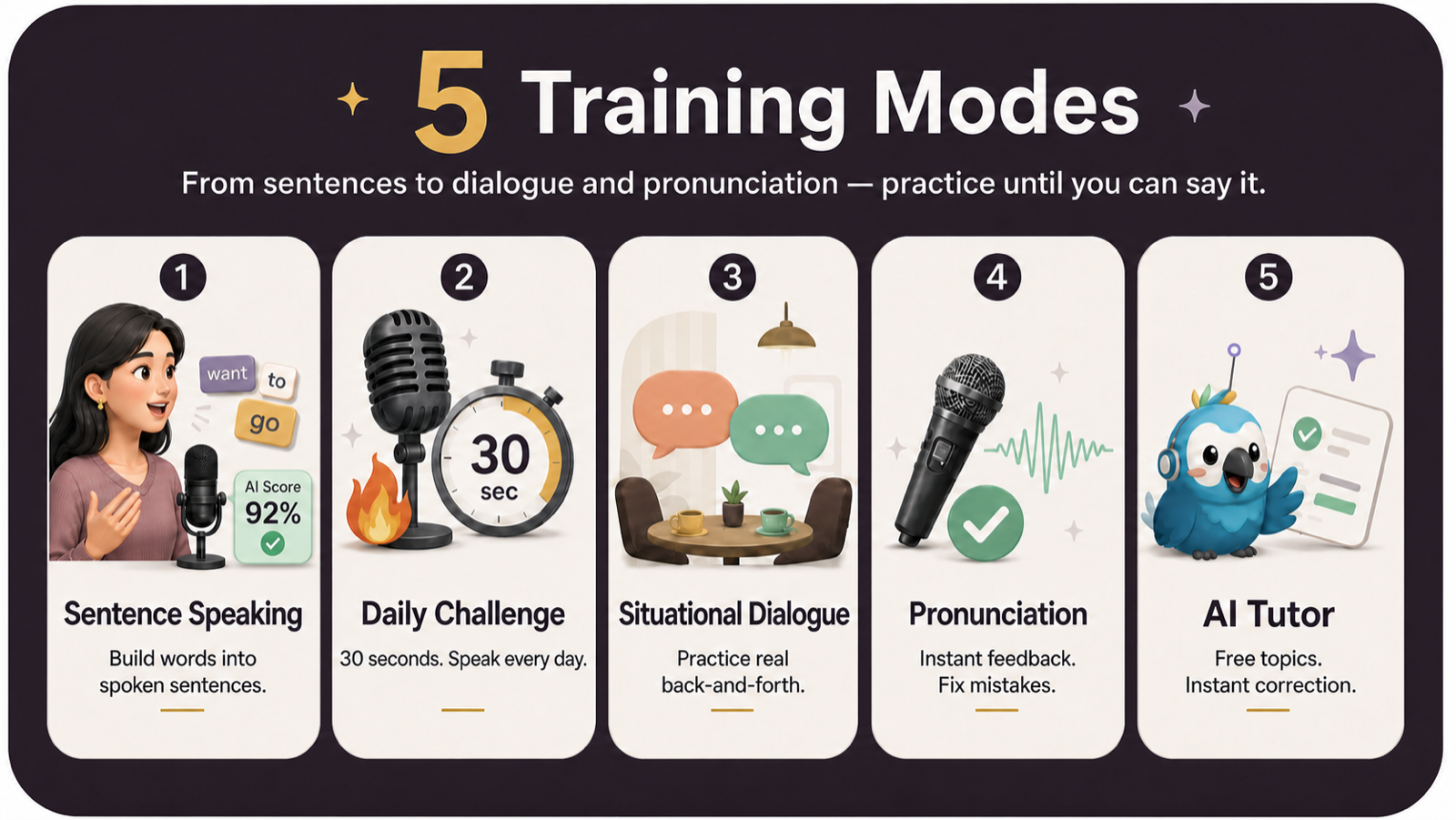
Listen, speak immediately, and see how closely your response matches.
View real product screen
Speak first, then compare with a more natural response and build faster reflexes.
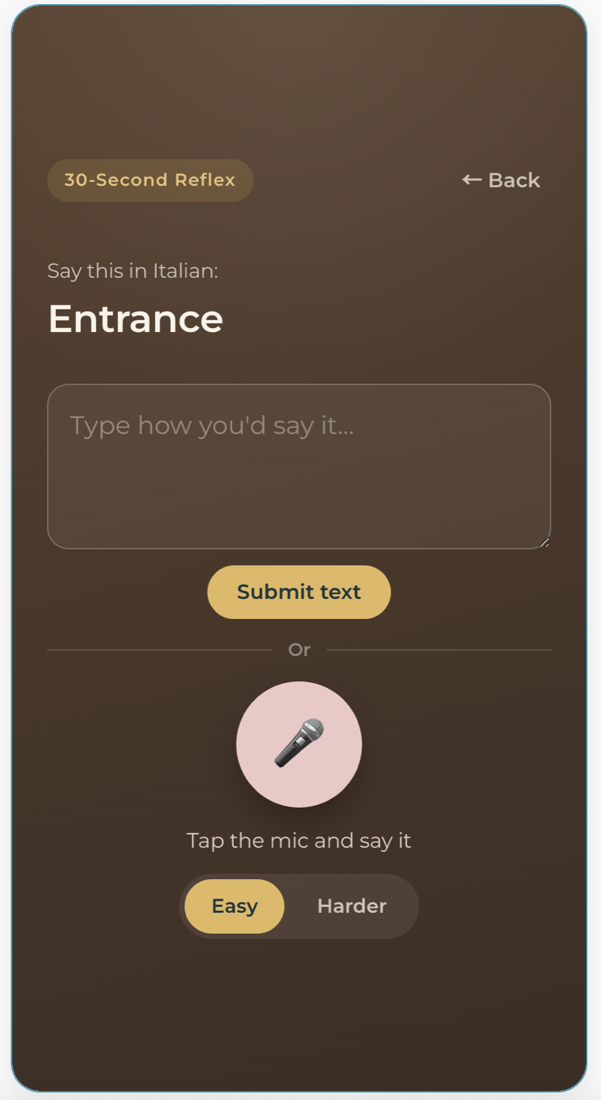 View real product screen
Practice natural back-and-forth for travel, shopping, cafés, and daily life.
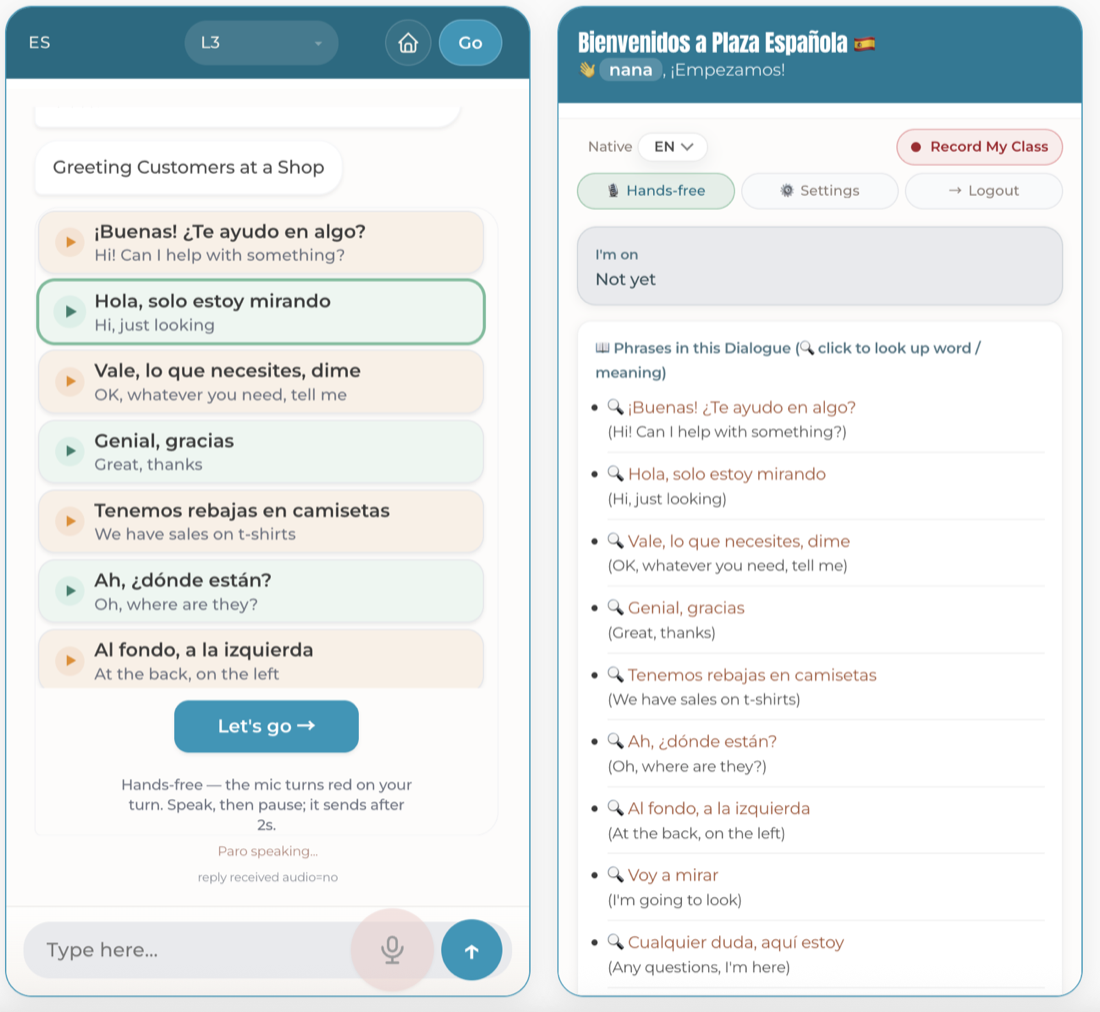 View real product screen
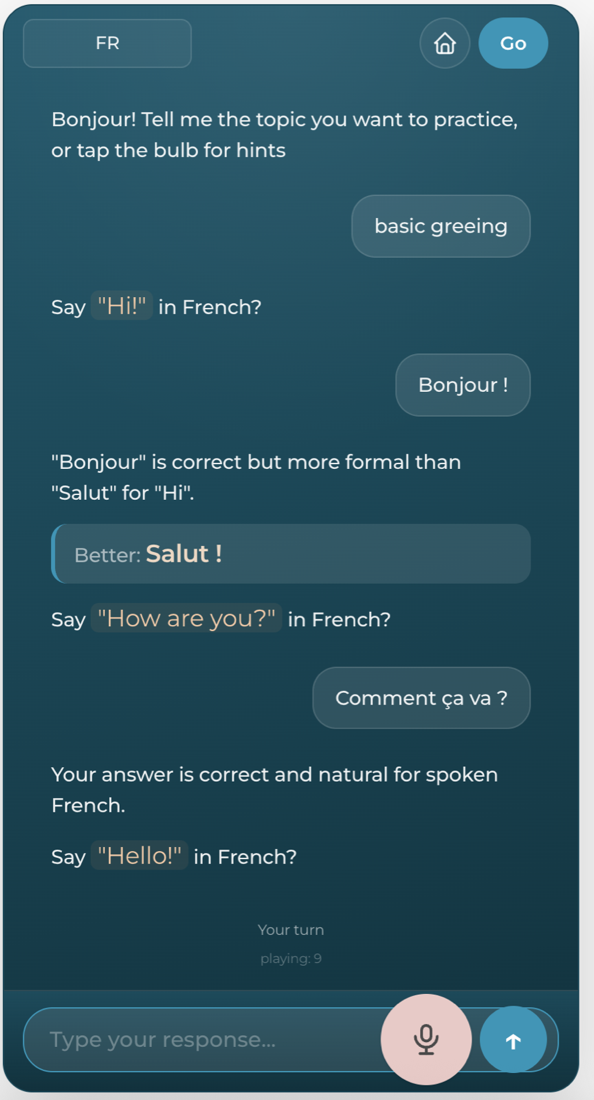
Tell the AI Tutor what you want to practice and start a custom speaking session.
 View real product screen
Hear the model, say it aloud, compare, and repeat until it becomes clear.
 View real product screen
Stop freezing when someone switches to English. Practice the reply before you need it.
Don't wait until the waiter is staring at you. Practice the Spanish you will actually use.
Say bonjour naturally, before the Paris shopkeeper switches to English.
Italy is booked. Order your first espresso in Italian — before the barista switches to English.
Practice the Japanese you need before you are standing in front of the clerk.
Understanding subtitles is not the same as answering someone. Practice out loud.
Stop freezing when someone switches to English. Practice the reply before you need it.
Don't wait until the waiter is staring at you. Practice the Spanish you will actually use.
Say bonjour naturally, before the Paris shopkeeper switches to English.
Italy is booked. Order your first espresso in Italian — before the barista switches to English.
Practice the Japanese you need before you are standing in front of the clerk.
Understanding subtitles is not the same as answering someone. Practice out loud.
1 language from A0 to B1 + limited AI features.
All languages + AI features.
Custom speaking drills for teams, schools, and programs.